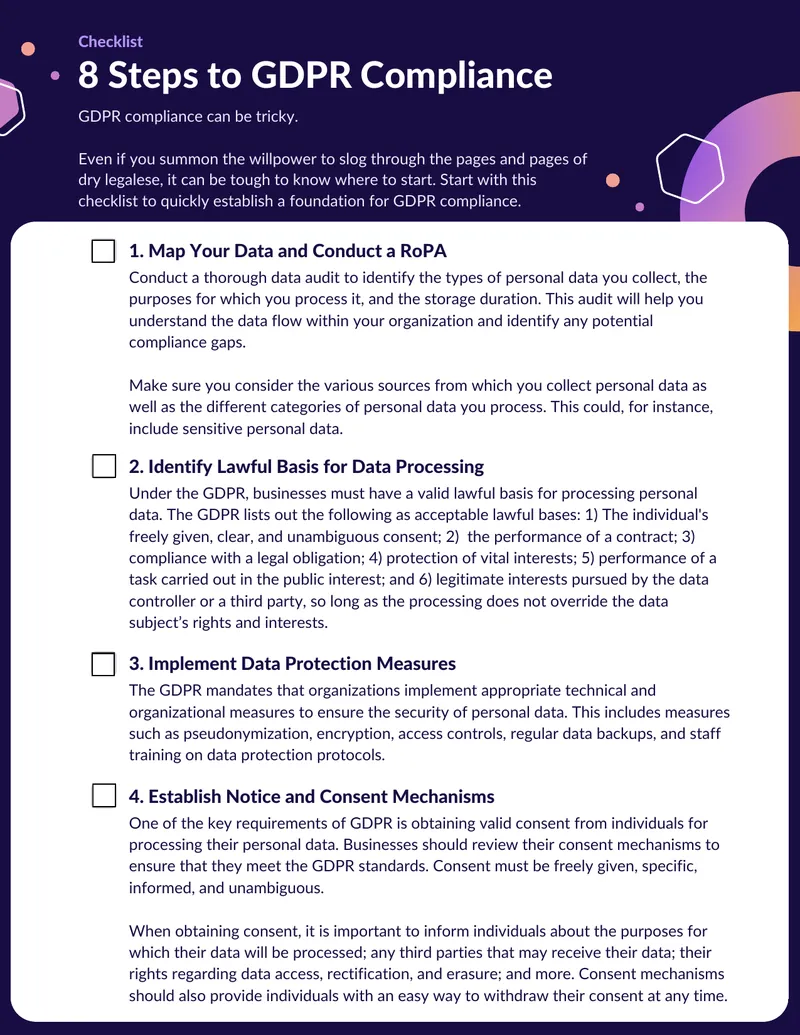

This guide outlines essential steps for achieving compliance with the General Data Protection Regulation (GDPR). It begins with conducting a thorough data audit to identify the types of personal data collected, processing purposes, and storage duration. The document emphasizes the necessity of establishing a lawful basis for data processing, as mandated by the GDPR, which includes consent, contract performance, and legal obligations. It details the implementation of data protection measures such as encryption and access controls, and the establishment of notice and consent mechanisms to ensure valid consent from individuals. The guide also addresses the evaluation of international data transfer needs, highlighting frameworks like adequacy decisions and standard contractual clauses. Additionally, it discusses the importance of developing a Data Subject Access Request (DSAR) process to respond to privacy rights. The document concludes by stressing the need for ongoing review and iteration of compliance practices to adapt to evolving data processing activities.